

Puppy vaccination schedule: what your puppy needs, and when
Book an appointment →
The short answer
It is simpler than it first looks.
Puppies are usually vaccinated from 6–8 weeks of age, then every 2–4 weeks until they are 16 weeks or older. That last dose is the one that matters most, and it is an easy one to lose track of, so it is something we keep an eye on with you. You do not have to keep your puppy indoors until the course finishes, and careful socialising can begin before then, because the window that shapes your dog's temperament is closing at the same time.
How does a puppy vaccination course actually work?
Puppies are born with some protection borrowed from their mother. It fades over the first few months, and until it does, it can also stop a vaccine working properly. That is the whole reason a puppy needs several doses rather than one: we cannot know the exact week that borrowed protection runs out, so we cover the range.
So we start at 6 to 8 weeks of age, then repeat every 2 to 4 weeks until your puppy is 16 weeks or older. The vaccines protect against distemper, hepatitis, parvovirus, parainfluenza and bordetella. Together these are commonly known as a C5 vaccination.
We also recommend protecting against leptospirosis, a relatively new and deadly disease in Sydney that is spread by rats. A vaccine prevents both types of leptospirosis, and it can be started at the second puppy vaccination. This plus the C5 is commonly known as a C7 vaccination.
Why is the 16-week vaccination the important one?
This is the part most schedules skim over, and it is probably the most useful thing on this page.
By around 16 weeks, the protection a puppy borrowed from its mother has usually faded enough that the vaccine can do its job properly. The dose given at 16 weeks or older is the most important one in the whole course.
Plenty of puppies finish a three-dose course at 12 weeks, and it is completely reasonable to assume that is the end of it. If the final dose landed before 16 weeks, we are happy to look at the record with you and talk through whether one more would help. It is not something to worry about, and it is a quick thing for us to check.
When can my puppy meet other dogs?
Sooner than most people expect, and this is one place where waiting carries a cost of its own.
The weeks when a puppy learns what is normal in the world close at around the same age the vaccination course is still running. A puppy kept away from everything until they are “fully vaccinated” can miss that window, and the behaviour problems that may follow are harder to work through later than they would have been to prevent.
So we would much rather your puppy started meeting the world before the course is finished. It can matter a great deal to how your dog turns out, and it can be done safely while the vaccinations are still going, as long as it is done carefully. We will talk you through what that looks like for your puppy at your next visit.
It does not mean the dog park, and it does not mean the footpath outside the hospital. The idea is to keep things controlled, so away from ground that unknown dogs use, and meeting only healthy puppies and fully vaccinated adult dogs.
In practice, a friend's vaccinated adult dog in a clean back garden is lovely, and so is carrying your puppy out to see the world. The public park where every dog in the suburb toilets can wait a few more weeks. If you are ever unsure about a particular outing, we are happy to talk it through with you.
What does the schedule look like?
The shape of a course is always the same, and the detail is not, which is on purpose. What your puppy needs depends on your puppy, on where you live and on what they will be doing, so we will settle the exact plan together once we have met them.
- 6–8 weeks - the first vaccination, usually given by the breeder or shelter, who should be able to pass you the record.
- Every 2–4 weeks after that - further doses. Not closer together than two weeks.
- 16 weeks or older - the final puppy dose, and the one that does the most work.
If the breeder or shelter gave you a record, we would love to see it at the first visit, and we will work out together what your puppy has already had and what is still due. If it has gone missing somewhere along the way, that is no trouble at all, and we can still piece it together.

When should I involve a vet?
Please get in touch with us, rather than waiting, if any of these sound familiar:
- Your puppy's final dose was given before 16 weeks, and nobody has yet talked with you about whether another one may be needed.
- You do not have a vaccination record from the breeder or shelter.
- Your puppy is off their food, lethargic, vomiting or has diarrhoea, and we would much rather see them today than have you wait and see, because parvovirus is a genuine emergency in an unvaccinated puppy.
- You are not sure what your puppy can safely do this week, and you would like someone to talk it through with.
What we do at Macquarie Veterinary Hospital
Orthopaedic surgery and in-hours emergency consults, Macquarie Park.
We run puppy preschool here, and the vaccination visit is a natural time for us to tell you about it, because the two really are one decision made once.
After hours we refer to our after-hours emergency partner, listed in the footer.
Vaccinations and socialising, at the same visit
When you come in for the next vaccination, we will talk about socialising at the same visit, because the two decisions run on the same clock: the course is still going while the window that shapes your dog's temperament is already closing. Treating them as one conversation is the kindest way we know to get both of them right, and it is a conversation we are always happy to have.
Book an appointment →Common questions
Can I take my puppy outside before it is fully vaccinated?
Yes, with a little care. Carrying your puppy in public is ideal, and we would keep them to healthy, fully vaccinated dogs and off the ground where unknown dogs toilet until the course is finished.
What happens if I miss a dose?
Please give us a ring, and try not to worry about it. Missing one is common and usually easy to sort out, and what matters most is that a dose lands at 16 weeks or older.
Do the vaccines have side effects?
Most puppies are simply a bit quiet for a day, and they settle on their own. Anything more than that, such as facial swelling, repeated vomiting or collapse, is worth a call to us straight away.
References
- WSAVA Guidelines for the Vaccination of Dogs and Cats (2024) - core vaccines, the 6–8 week start, and the 16-week dose.
- Australian Veterinary Association - Vaccination of dogs and cats - the Australian position, and why schedules are not prescriptive.
Our vaccination protocols follow WSAVA and Australian Veterinary Association guidance. Medically reviewed by Dr Michael Stephen, BVSc, MVSc · updated November 2026. This guide is general information, not a substitute for examining your individual puppy.
had doctor tessa for our consultation appointment today and she was very kind and lovely. we’ve been coming to this clinic since our dog was a puppy and have had very good experiences throughout the years!
Maria Macuja, Google review · 5 stars
A real review, quoted as written. Read our Google reviews →
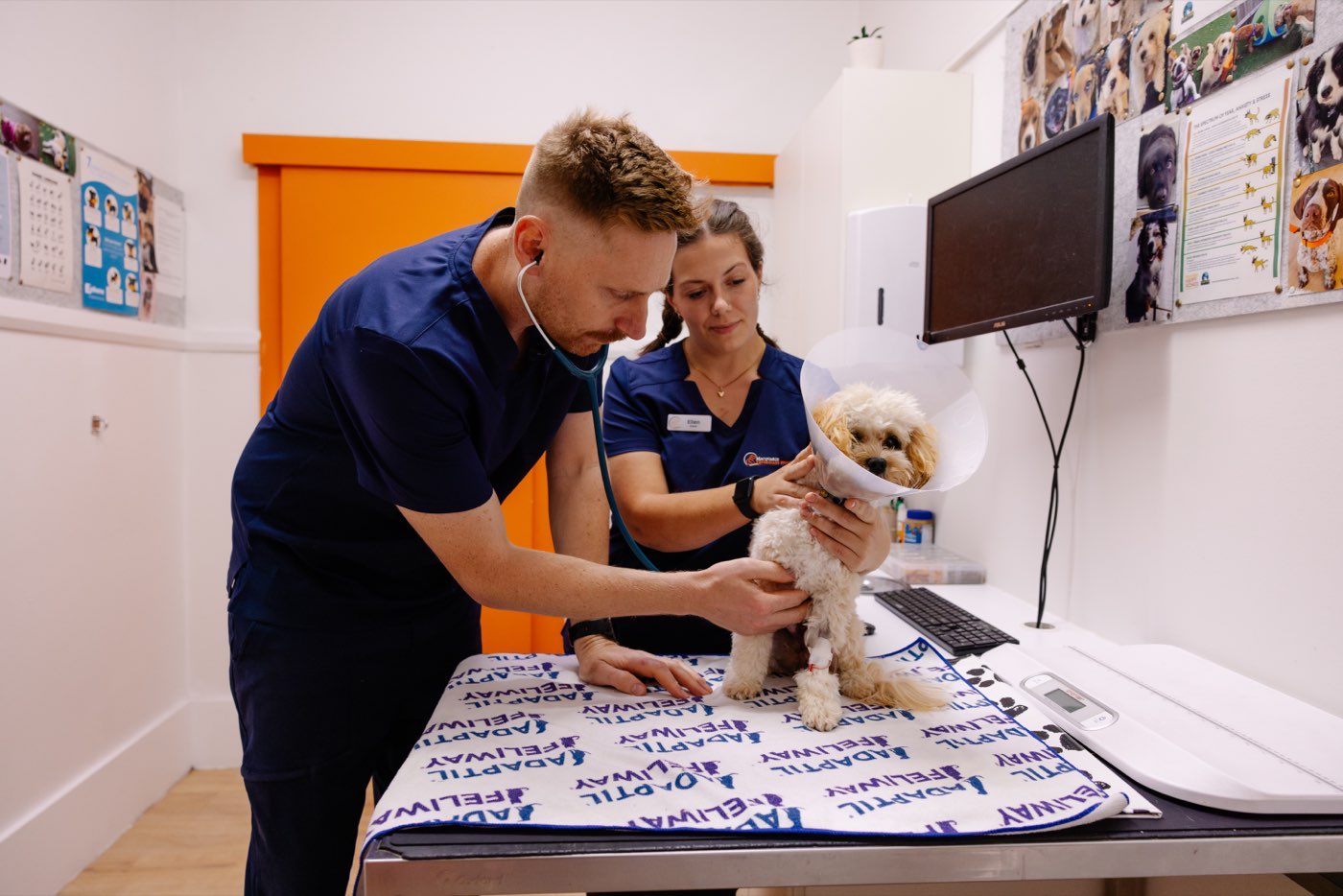
Medically reviewed by Dr Michael Stephen, BVSc, MVSc.
Book your puppy in
We will check where your puppy is up to, let you know what is due and when, and talk you through what they can safely do in the meantime. If you have any questions before then, you are always welcome to give us a call.
Book an appointment →