

Dog throwing up white foam: what it means
It is an unsettling thing to find on the floor, and the froth itself tells you less than you would think. What matters is whether anything is actually coming up, how your dog looks between episodes, and how often it is happening.
Book an appointment →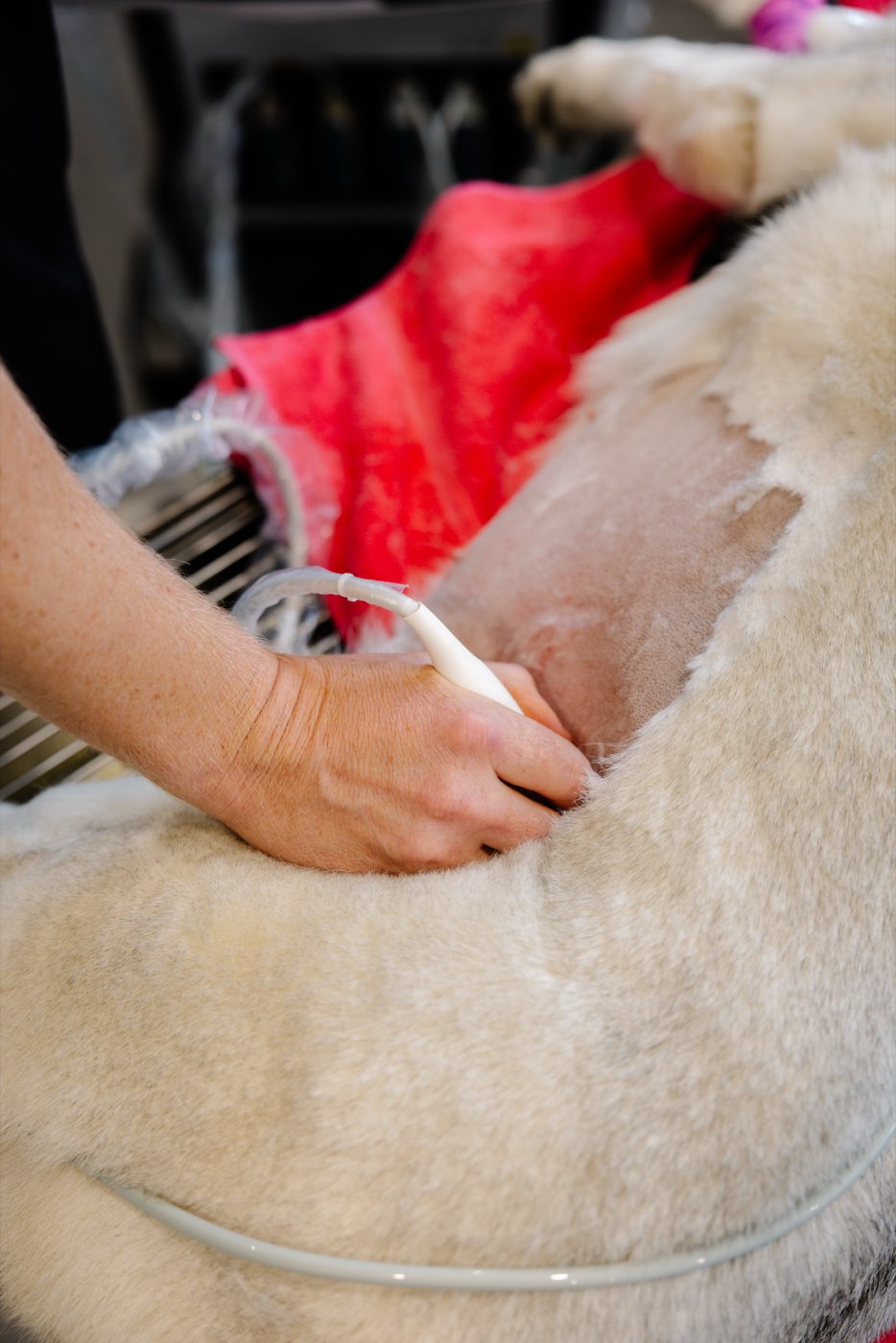
The short answer
Here is what to watch, and when to ring.
White froth can point to a mild or a serious problem, and it looks the same either way, so we always recommend a consultation to find the cause. Please give us a ring today if it keeps happening, if your dog is flat, sore in the belly or off food, or if there is blood in it. Go now, without ringing first, if your dog is heaving and producing nothing at all.
Heaving and producing nothing? Go now.
- Retching or trying to vomit with nothing produced
- A swollen, hard or tight belly
- Drooling heavily, panting, restless, unable to settle or lie down
- Pale gums, weakness or collapse
- Standing with the front legs forward and the chest low, sometimes called a praying position
- Blood in the vomit, or something that looks like coffee grounds
- You know or suspect they have eaten something: a toy, a sock, a corn cob, a bone, string, a battery, chocolate or anything from the garden shed
A dog trying to vomit with nothing coming up can be a twisted stomach, which is one of the fastest-moving emergencies in dogs. Do not wait to see if it settles. Ring 02 9888 1833 while somebody else gets the car. Outside our hours we refer to our after-hours emergency partner, listed in the footer.
What does white foam actually mean?
Froth is saliva churned up with air, and it could be coming from the airways, the oesophagus or the stomach. It can point to a mild or a serious underlying problem, and it looks much the same either way, so we always recommend a consultation with one of our vets to find the cause.
So the useful questions are different ones.
- Is there retching or heaving, but nothing coming up?
- Is your dog bright between episodes, or flat?
- Has this been a recurring problem, or is this the first time it has happened?
Those three questions sort almost every case we see, and none of them is about the colour. We will go through them with you on the phone, so there is no need to have the answers ready before you ring.
Why is retching with nothing produced so serious?
Because it is the leading sign of a twisted stomach, and that is one of the fastest-moving emergencies in dogs. The stomach fills with air or fluid, swells, and then twists on itself. It comes on suddenly and it needs surgery. Large, deep-chested dogs are most at risk.
Along with the heaving you may see heavy drooling, a bloated belly, restlessness and pacing, pale gums, weakness or collapse. The drooling is where this page and that emergency meet, because a dog dropping ropes of saliva on the floor and heaving looks, to a worried owner at 10pm, exactly like a dog throwing up white foam. Anyone would read it that way.
What makes a twisted stomach more likely
Ordinary dog life, mostly. A large or deep-chested breed, eating too fast, one big meal a day, and exercise soon after eating. If this is what you are watching, do not wait to see whether it settles. Ring us and start driving.
Could this be a cough rather than a vomit?
More often than you would expect. A dog coughs hard, swallows, then brings up a small amount of white froth, and it is entirely reasonable to describe that as vomiting. We are asked about it most weeks, so it is a welcome question rather than a silly one.
The usual culprit is kennel cough, which is the commonest cause of upper respiratory illness in dogs. The cough is dry and harsh, very little comes up with it, and an affected dog can be flat and eating poorly. Most dogs are over it within about two weeks. A few go on to develop pneumonia, so a cough that is getting worse rather than better is worth a call.
How to tell a cough from a vomit
It is worth watching what happens immediately before the froth. If your dog braces, extends the neck and makes a honking noise, that is a cough, and if the belly heaves, that is a vomit. It changes what we look at, so telling us which one it was is genuinely useful, and a video on your phone is more useful still.
Is your dog vomiting, or regurgitating?
A third possibility, and again the difference matters more than the froth does. Vomiting involves retching. Regurgitation does not. The food or fluid simply appears, with no warning and no effort, and that points to a problem in the food pipe rather than the stomach.
So foam that arrives after a struggle and foam that just appears send us down different paths. If your dog brings things up shortly after eating with no effort at all, say so when you ring.
What else brings up froth?
- Something swallowed. The usual offenders are toys, socks, pieces of clothing, rocks, corn cobs and bones. String and ribbon do more damage than most owners expect. A blocked gut is an emergency, and it often needs surgery to clear.
- Something toxic. Chocolate is the common one, and vomiting is one of the signs. If your dog has eaten chocolate, even a small amount, please ring us as soon as you can.
- Raw dough. An odd one that belongs on this page because of what it does. Dough keeps rising once it is in the stomach, which brings on belly pain and vomiting, and it can block the gut.
- A battery. Drooling, refusing food, vomiting and belly pain, with a battery missing from the house, is a ring-us-now combination.
- Everything else that makes dogs vomit. Which is a long list, and the reason we would rather see your dog than guess.
Should I give my dog an antacid or something from my cupboard?
We would rather you did not, and there is a good reason for it. The tablet in your bathroom cupboard is not an anti-vomiting medicine and it will not fix this, and if the real problem is a blockage or a toxin, slowing the gut down is the last thing your dog needs.
Acid-suppressing tablets in particular are given to pets far more often than they help. They do not stop vomiting, and there is no benefit in giving them routinely to a dog with a sore stomach, a sore pancreas, or liver or kidney disease.
There are medicines that genuinely settle a vomiting dog, and we can help with those. They are prescription, and which one and how much depends on your dog, on what is causing it and on anything else they are taking, so we work it out for your dog at the consult rather than printing it on a page.
What can you do at home while you watch?
- Food away for a few hours, with water still where they can reach it.
- Water in small amounts, often. A dog who gulps down a whole bowl after vomiting will usually bring it straight back.
- The number of episodes, and the times. Three in an hour and three in a day are different problems, and it is one of the most useful things you can tell us.
- A look at the gums. Pale, grey or white gums are a reason to ring us immediately.
- A gentle hand on the belly. If it feels tight, swollen or clearly sore, that is a reason to stop and ring us.
- A video, if you can manage one. Thirty seconds on a phone settles the cough-or-vomit question instantly.
Most weeks? We would like to see them
If this happens most weeks, we would like to see them. The odd episode, such as after eating grass, is usually a one-off, but vomiting even once a week is less likely to be a sensitive stomach than a pattern worth explaining. A dog who brings up froth every Sunday morning is an easy thing to get used to, and there is nothing careless about that. It is simply much easier for us to sort out at the once-a-week stage than at the every-day stage.
Book an appointment →When should you ring us?
We would want to see your dog if there is blood in the vomit, or anything in it with the look of coffee grounds, which is digested blood. Please ring us as well if your dog is flat, has been vomiting for more than 24 hours, has a painful belly or a fever.
The thresholds are tighter for vomiting than for diarrhoea, and the reason is fluid. Vomiting that goes on upsets the salts a dog's body runs on, and it dehydrates them quickly.
How to reach us
During opening hours we are on 02 9888 1833, and it helps us if you describe exactly what you are seeing. Outside them we refer to our after-hours emergency partner, listed in the footer.
Macquarie Veterinary Hospital keeps room in the day for urgent cases during opening hours, so a dog that is retching can be seen straight away.
What happens when you bring your dog in?
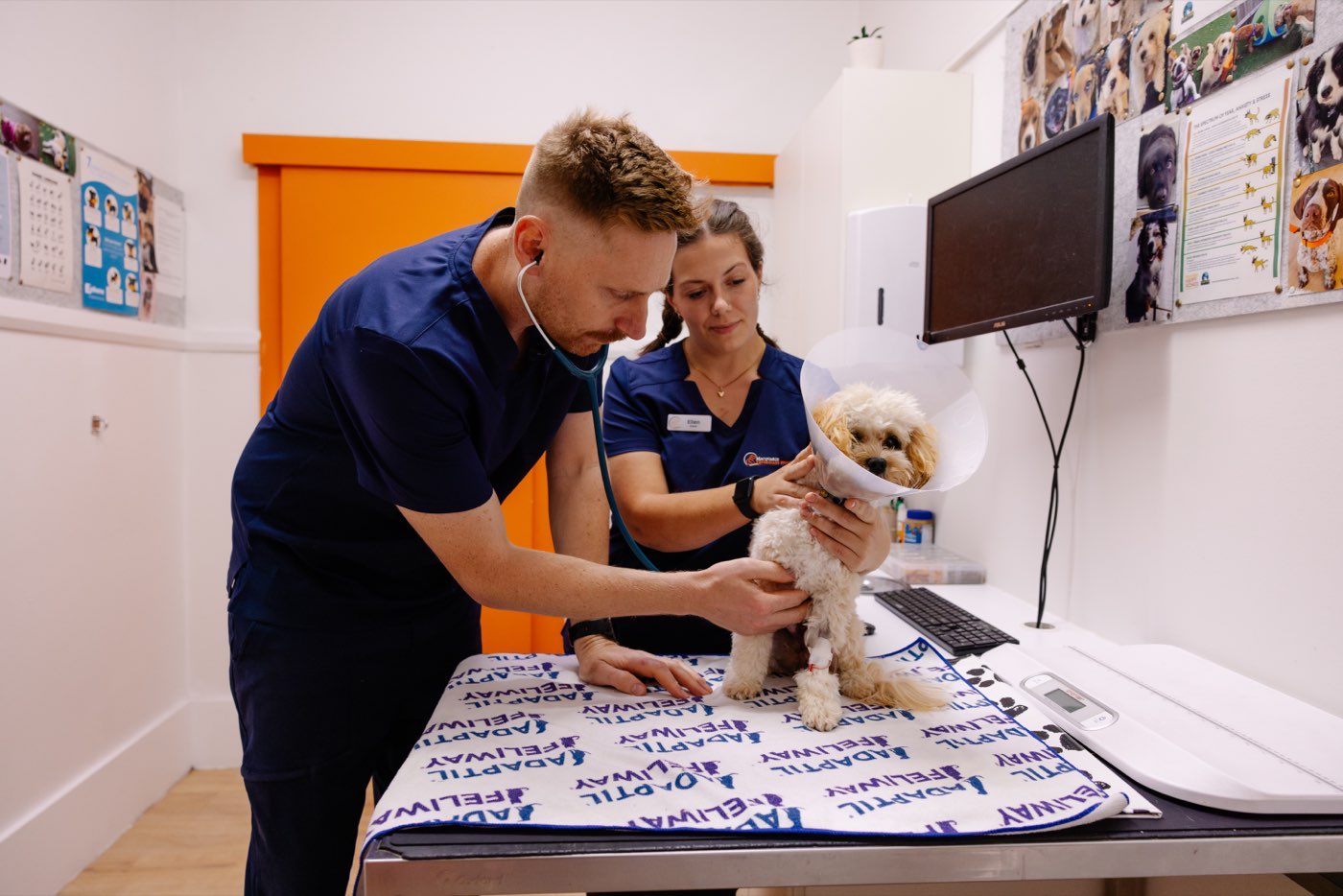
We will take the history first, so that we know what came up, how many times, what happened just before it, whether anything is missing from the house, and how your dog has been in between. Then we examine them, with particular attention to the belly and the gums.
Where a blockage or a twisted stomach is possible, imaging is how it gets answered. That usually means an x-ray of the belly, and sometimes an ultrasound. Macquarie Veterinary Hospital has both on site, so it happens in the same visit rather than at a second appointment somewhere else.
What happens next is built around your dog rather than off a list, because it depends on what we find and on how they are on the day. We will talk you through each step as we go, and answer any questions as they come up. You are welcome to ring us on 02 9888 1833 beforehand and we will tell you what a visit involves.
Common questions
My dog throws up foam first thing in the morning and is fine afterwards. Is that normal?
It is a very common pattern and it is often nothing, which is why people live with it for years without mentioning it. If it is happening weekly or more, we would rather have a look at them, because once a week is often enough to be worth explaining.
My dog ate grass and then brought up foam.
Grass and froth together is the classic isolated episode.
There was a bit of yellow in it.
Colour is not the useful signal here, so a little yellow is not something to worry about on its own. What matters is how often it is happening and how comfortable your dog is in between. Blood, or anything that looks like coffee grounds, is the exception, and that is always a reason to ring us.
Can I just watch overnight?
If your dog is bright, drinking, comfortable and it has happened once, that is a reasonable call to make. If your dog is heaving and producing nothing, no. That one does not wait until morning.
What next?
If the other end is the problem too, start at dog diarrhoea, when to worry. To work out whether anything at all is an emergency, see when to rush to the emergency vet.
References
Our approach to vomiting in dogs follows Australian and international veterinary guidance, including RSPCA Australia, the Riney Canine Health Center at Cornell University, and the American College of Veterinary Internal Medicine.
- Cornell University College of Veterinary Medicine, Riney Canine Health Center: Gastric dilatation volvulus (GDV) or bloat. Non-productive retching as the leading sign, the other signs including excessive drooling, and the risk factors. Checked 31 July 2026.
- Cornell Riney Canine Health Center: Vomiting. When to ring, blood and coffee grounds, the 24-hour threshold, dehydration, once-a-week vomiting, and the difference between vomiting and regurgitation.
- Marks SL, Kook PH, Papich MG, Tolbert MK, Willard MD. ACVIM consensus statement: Support for rational administration of gastrointestinal protectants to dogs and cats. Journal of Veterinary Internal Medicine 2018;32(6):1823-1840. That acid-suppressant drugs should not be used as antiemetics.
- Cornell Riney Canine Health Center: Risks of kennel cough. That it is the commonest canine upper respiratory disease, the character of the cough, and the usual two-week recovery.
- Cornell Riney Canine Health Center: Gastrointestinal foreign body obstruction in dogs. Common foreign bodies, the added danger of string, that obstructions are emergencies, and the role of x-ray and ultrasound. Updated December 2024.
- RSPCA Australia Knowledgebase: Why is chocolate toxic to dogs and other animals? The signs, and to ring after any amount.
- RSPCA Australia Knowledgebase: What are common household dangers for pets? Raw dough rising in the stomach, and swallowed batteries.
Updated November 2026. General information, and it cannot replace someone examining your dog. If you are unsure about anything here, we are happy to talk it through on the phone.
I would like to thank the wonderful and friendly vets and nurses, especially Dr. Ray and Dr. Janet, at Macquarie veterinary hospital for always looking out for my golden retriever, ever since she was a puppy. All the staff here are warm, welcoming, and professional, providing excellent medical advice and are willing to answer all my questions. My puppy always loves visiting and seeing all of the doctors.
Eric Ong, Google review · 5 stars
A real review, quoted as written. Read our Google reviews →
Medically reviewed by Dr Michael Stephen, BVSc, MVSc.
Still happening? Come and see us
The timeline is useful, and a video if you have one. During opening hours we are on 02 9888 1833. Outside them, our after-hours emergency partner, listed in the footer is open when we are not. If your dog is heaving and producing nothing, please do not book. Ring.
Book an appointment →