

Dog joint supplements: are they worth what you are spending?
If you are buying a joint supplement every month and quietly wondering whether it is doing anything, you are far from the only one, and it is a fair question. The answer is not the same for every supplement, and the differences are worth knowing before you spend again.
Book an appointment →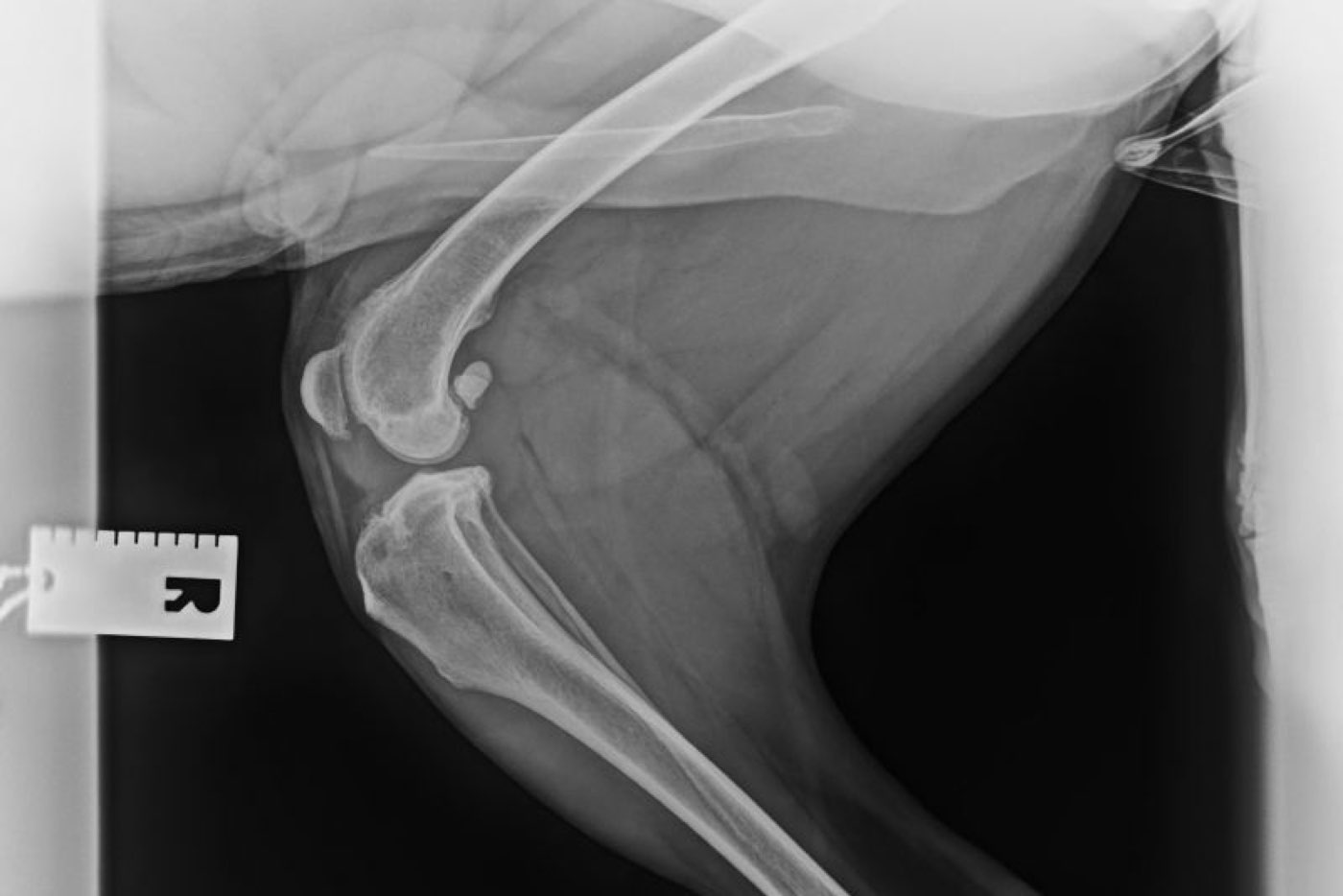
The short answer
Before you buy another tub, the most useful money is usually spent finding out what is wrong with the leg.
Not all joint supplements are the same. Omega-3 has real evidence behind it, glucosamine and chondroitin do not when it comes to pain, and green-lipped mussel sits somewhere in between. None of them replaces a diagnosis, and none should stand in for proper treatment, so we would look at the limp first and then work out with you what is worth buying.
Why is there no single answer to this?
Because “joint supplement” is a shelf, not a substance. Three very different things sit on it, they have been tested separately, and the results are not the same. One verdict for all of them would be wrong.
Here is the starting point. Many of the joint supplements on the market do not have solid evidence behind them, and none of them should be used in place of proper treatment. Two words there are worth holding on to. Many, not all. And the problem is substitution, not harm.
What does the evidence say about glucosamine and chondroitin?
This is the pair most Australian owners are buying, and it is the pair with the least encouraging news. If it is what you have been buying, you have a great deal of company and nothing to feel silly about.
Glucosamine and chondroitin have been tested hard, across dozens of controlled trials in dogs and cats. The result is a very marked non-effect. They should no longer be recommended for managing arthritis pain.
There is one thing that does not mean, and we would rather be clear about it. Those trials measured pain, and they did not test whether glucosamine does anything to cartilage over years. What it means in practice is simple: if you are giving glucosamine to make your dog more comfortable, we would not count on it doing that job.
Is green-lipped mussel different?
Yes, and it is worth separating out, because green-lipped mussel is not a glucosamine product. It is a source of omega-3, and that puts it in different company.
When these products are grouped for testing, green-lipped mussel sits with the omega-3 products rather than with glucosamine, and that is the group that came out well.
Here is the caveat. Those results were reported by group, not product by product. So green-lipped mussel sits in good company. That is not the same as saying it has been proven on its own.
It does have older evidence of its own. Two of the best-designed trials in this field looked at green-lipped mussel, and it came out with a moderate level of confidence behind it. Some prescription anti-inflammatories sit at that same level, and so does one particular glucosamine combination, which cuts against what we said a moment ago. We would rather show you the whole picture than half of it.
What about omega-3 and fish oil?
This is the one class where the evidence holds up, and it has held up twice, ten years apart.
Of all the joint supplements tested in dogs, omega-3 is the only one where the evidence is strong, and it has come out that way twice, a decade apart. Omega-3 products genuinely ease the pain of arthritis in dogs and cats.
There is also good evidence for what that looks like in a real consulting room. Across 131 arthritic dogs at 33 ordinary veterinary practices, dogs fed a fish-oil omega-3 diet needed less anti-inflammatory over twelve weeks. Worth knowing: that particular trial was funded by a pet food maker.
It is worth seeing what that describes: omega-3 alongside proper pain relief, letting the vet dial the medication down, rather than omega-3 instead of it.
When a limp needs us rather than a supplement
- Your dog is lame, or holding a leg up, and has been for more than a day or two
- The limp comes and goes, which is the classic pattern of a partly torn cruciate rather than simple wear and tear
- Your dog is struggling to get up, or has stopped jumping onto the couch or into the car
- A joint is hot, swollen, or painful to touch
- Your dog is snapping or yelping when handled somewhere they never used to mind
These are reasons to have the leg examined rather than reasons to try another product, because arthritis has a long list of look-alikes and some of them have a much better fix. We are on 02 9888 1833 and we will get your dog seen.
What is worth spending the money on instead?
This is what we would talk you through if you rang and asked, and none of it is a product.
- A diagnosis. “Arthritis” is a conclusion, not a starting point. A limp on a back leg can be a torn cruciate, a slipping kneecap, a hip problem or arthritis, and they are managed very differently.
- Weight, if there is weight to lose. Dogs limp noticeably less once they have lost about 6% of their body weight. For a 30kg dog that is under two kilos. It costs nothing, and the evidence behind it beats the evidence behind most of the cupboard.
- Actual pain relief. Arthritis is painful, the longer the pain goes untreated the worse it gets, and getting a sore dog comfortable again is the part we most want to help with. The options run from anti-inflammatories, to medicines for long-term pain, to treatments that slow cartilage breakdown. All of them are prescribing decisions we make with you, for your dog.
- Changing the house, not just the dog. Shorter walks on even ground, skipping stairs, covering slippery floors, and a ramp for the car. Slippery floorboards undo a lot of good treatment.
- Omega-3, discussed with us. If you are going to buy one thing, this is the class with the evidence behind it. We can talk you through the form and the amount rather than leaving you to guess, because that part is a prescribing decision too.
If your dog has started running with both back legs together, our page on bunny hopping explains why we would look at the hips and knees, and hydrotherapy for dogs covers where water-based exercise fits once we know what is wrong.
Before the next tub, a look at that leg
Having us look at that leg tells you what is actually going on and what is worth paying for, which makes it a better first purchase than another tub.
When should you stop trying supplements and ring us?
Trying a supplement is a slow, low-stakes experiment, and for a mildly stiff older dog there is no harm in it at all. Some situations are neither slow nor low-stakes, though, and another month of tubs costs your dog time. Arthritis is painful, and the longer the pain goes untreated, the worse it gets.
We would much rather you rang us than bought anything else, if you notice any of these:
- Your dog will not put the leg down at all, or is holding it up.
- The limp came on suddenly, or straight after a yelp, a fall or a run.
- A joint is swollen, hot, or your dog objects to it being touched.
- It is getting worse rather than better over a couple of weeks.
- Your dog is struggling to get up, is reluctant on stairs, or has stopped doing something it used to enjoy.
- It is a young dog. Limping in a dog that is still growing is a different set of problems from arthritis, and worth looking at early.
- You have been giving a supplement for a month or more and the dog is still sore. That is your answer, and it is worth acting on rather than changing brands. There is nothing wrong with having given it a try.
What happens when we examine that leg?
We watch your dog walk, then gently feel every joint in the leg and compare it with the other side. A great deal is settled at that point, and no supplement can do that for you. What we recommend afterwards is built around your dog and we adjust it as they go, so you are never left guessing on your own.
- Imaging where it changes the answer. X-ray and ultrasound are on site here. CT scans are done at our sister practice, Advanced Vet Care in Lane Cove, and we refer your pet there when one is needed.
- A plan you can actually follow, covering pain relief, weight, exercise and what to change at home, and we are here to help with any of it.
- A straight answer on supplements, including telling you to stop buying one if we do not think it is earning its place.
- Orthopaedic surgery here if it turns out to be needed, so a diagnosis does not automatically become a referral somewhere else.
Spend on the diagnosis first
The diagnosis is worth paying for before the supplement is. Finding out why your dog is sore is one appointment rather than another six months of guessing, and we will be plain about what anything after that would cost.
Recently took our greyhound to see Dr Sonia and the team at Macquarie vets for a tendonectomy. A great team who I found to be fully transparent and honest throughout the whole process. We will be deffinately bringing him back for any future needs :)
Calvin Neo, Google review · 5 stars
A real review, quoted as written. Read our Google reviews →
Common questions
Should I stop the supplement my dog is already on?
Not without a word with your vet, and not because of a website. Nothing here says these products are harmful. What the evidence says is that glucosamine and chondroitin are unlikely to be doing much for pain, so if that is the only reason you are buying it, the money is probably better spent elsewhere. If you bring the tub along to your appointment we will happily go through it with you.
Is green-lipped mussel the same as glucosamine?
No. Green-lipped mussel is a source of omega-3, and it groups with the omega-3 products rather than with glucosamine. Those results were reported by group rather than by product, so it is not proof that green-lipped mussel works on its own. Separately, it does have a moderate level of confidence behind it.
How much omega-3 should I give my dog?
We can work that out with you for your dog. The right amount depends on their weight, on what else they are taking and on what is actually wrong with the joint, so it is not something a website can settle.
Does omega-3 help arthritis in people?
It is worth knowing that omega-3 has been studied closely in people too. In people, omega-3 fatty acids have strong evidence for pain relief and treatment in rheumatoid arthritis, and modest benefits in osteoarthritis, the “wear and tear” kind that most arthritic dogs have. Those are findings in people, so they do not prove the same in dogs, though they sit comfortably alongside the evidence in dogs above.
Do supplements slow arthritis down, even if they do not relieve pain?
That question is genuinely open, and we would rather say so than pretend otherwise. The testing looked at pain, so it cannot answer it either way. If long-term joint protection is what you are after, the two things with the clearest evidence are keeping your dog lean and treating the pain properly so that they keep using the leg.
My dog seems better since starting a supplement. Is that in my head?
Possibly not, and it is a welcome question rather than a silly one. Averages hide individuals, and your dog can genuinely do better than the average, though it is also true that arthritis comes and goes on its own. The way to settle it for your dog is a proper assessment now, so that there is something to measure against later.
We do orthopaedic surgery here at Macquarie Park, and we see emergencies during our opening hours. Medically reviewed by Dr Michael Stephen, BVSc, MVSc.
Our position on joint supplements rests on the systematic reviews listed below and on RSPCA Australia's guidance for arthritic dogs.
References
- RSPCA Australia Knowledgebase: I think my dog has arthritis, what can I do? Updated 17 June 2024. That many joint supplements lack robust evidence and are not a substitute for treatment, and the list of treatment and management options.
- Barbeau-Grégoire M, et al. A 2022 Systematic Review and Meta-Analysis of Enriched Therapeutic Diets and Nutraceuticals in Canine and Feline Osteoarthritis. International Journal of Molecular Sciences 2022;23(18):10384. The omega-3 finding, the chondroitin-glucosamine finding, and the category in which green-lipped mussel was placed.
- Aragon CL, Hofmeister EH, Budsberg SC. Systematic review of clinical trials of treatments for osteoarthritis in dogs. Journal of the American Veterinary Medical Association 2007;230(4):514-21. The type-I rating and moderate level of comfort for green-lipped mussel.
- Vandeweerd JM, et al. Systematic review of efficacy of nutraceuticals to alleviate clinical signs of osteoarthritis. Journal of Veterinary Internal Medicine 2012;26(3):448-56. That the evidence was low for every nutraceutical except omega-3 in dogs.
- Fritsch DA, et al. A multicenter study of the effect of dietary supplementation with fish oil omega-3 fatty acids on carprofen dosage in dogs with osteoarthritis. Journal of the American Veterinary Medical Association 2010;236(5):535-9. The 131-dog randomised trial and the reduction in carprofen dosage.
- Marshall WG, et al. The effect of weight loss on lameness in obese dogs with osteoarthritis. Veterinary Research Communications 2010;34(3):241-53. The measurable improvement in lameness from 6.10% weight loss.
- Kostoglou-Athanassiou I, Athanassiou L, Athanassiou P. The Effect of Omega-3 Fatty Acids on Rheumatoid Arthritis. Mediterranean Journal of Rheumatology 2020;31(2):190-4. Human evidence: omega-3 in rheumatoid arthritis, including fewer tender and swollen joints and reduced anti-inflammatory use in people.
- Cordingley DM, Cornish SM. Omega-3 Fatty Acids for the Management of Osteoarthritis: A Narrative Review. Nutrients 2022;14(16):3362. Human evidence: that results for omega-3 in human osteoarthritis are mixed, and that it may be effective but needs further research.
Drafted July 2026. General information, and not a substitute for someone examining your dog. We are happy to work out the right dose for your own animal.
Find out what is wrong before you spend again
An appointment at Macquarie Veterinary Hospital gives you a diagnosis, a plan and a plain answer about what is worth paying for. On-street parking on Jarvis Circuit, or the multi-storey car park underneath Coles, accessed from Halifax Street. Ring us on 02 9888 1833, or book online whenever it suits you.
Book an appointment →